

A biodegradable sensor for sensitive shipments
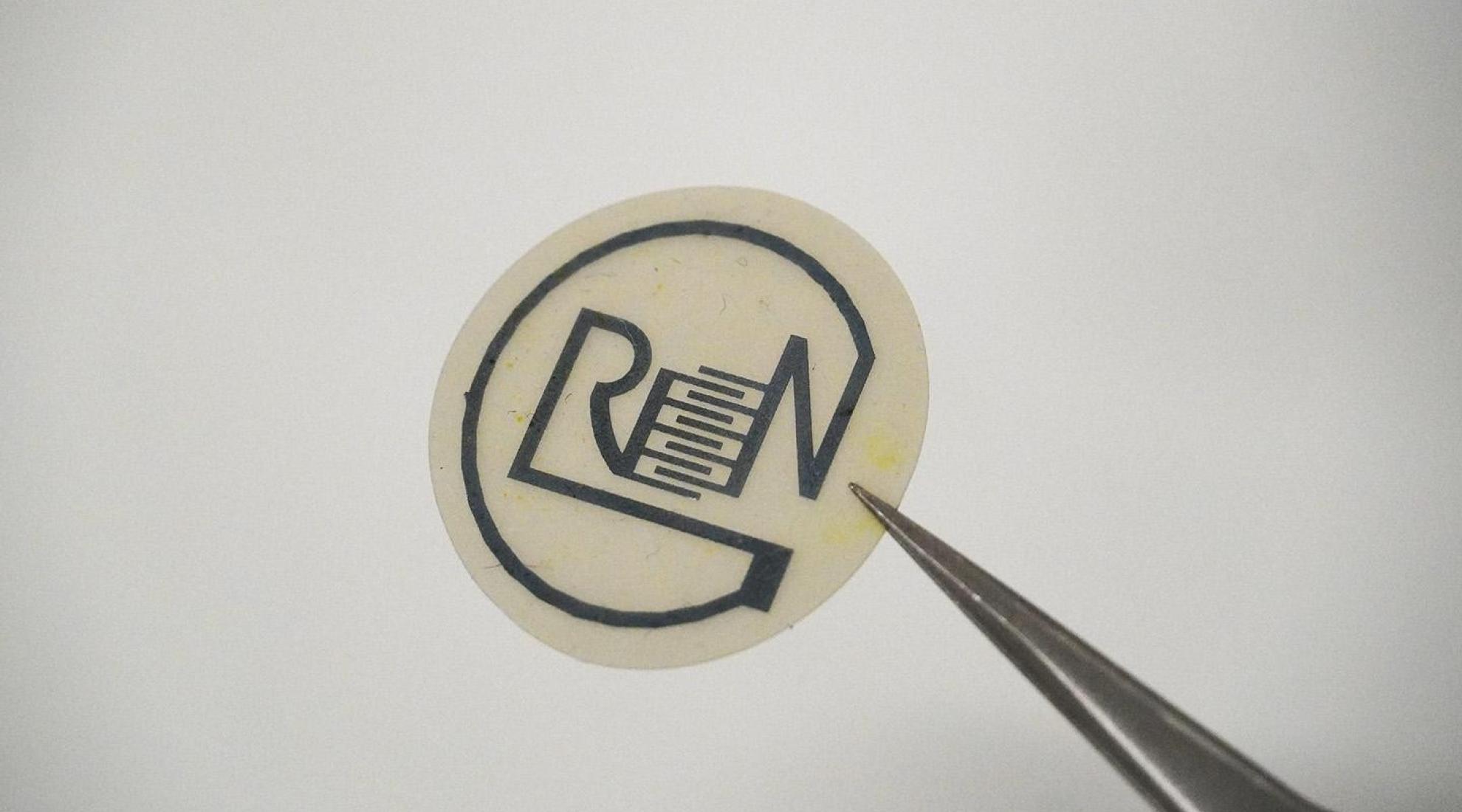
Swiss researchers have developed a smart sensor that monitors temperature and humidity during the transportation of sensitive goods, such as food and medicines. The sensor itself is fully biodegradable.
Related news

Swiss drones are flying high

In search of Earth's sibling

Swiss technology hunting space debris
Sensitive shipments must remain within defined temperature and humidity ranges throughout the entire supply chain. In practice, however, this can be difficult to monitor. Although sensors and data loggers based on silicon are widely used today, they are expensive and require batteries, which makes them unsustainable as they are not biodegradable. Furthermore, measurements taken at individual hubs in the supply chain do not provide information about what a shipment may have experienced in between.
Researchers from Empa, EPFL and CSEM have now developed a sensor that can detect when critical environmental conditions have been exceeded. This thin, sticker-like sensor is made entirely without silicon and is fully biodegradable. This makes it possible, for the first time, to assess the condition of a shipment over the entire duration of transport. The sensor is currently still in the development phase and has so far been demonstrated as a prototype.
Conductive tracks with a memory
The sensor works in a similar way to an RFID tag and requires neither a battery nor a transmitter. It consists of printed conductive tracks that form simple electrical resonance circuits. When exposed to an electromagnetic field (for example, by a reader), these circuits generate a characteristic signal that can be read.
Temperature and humidity influence the electrical properties of these circuits, which is why both factors must be considered when assessing circuit performance.Changes in conductivity and capacitance shift the resonance. This makes it possible to identify current environmental conditions without the need for conventional sensors or complex electronics. Unlike traditional data loggers, the sensor does not store time series data, but simply indicates when predefined threshold values have been exceeded.
An irreversible warning for temperature breaches
In addition, the sensor features an irreversible warning function. If a defined temperature threshold is exceeded — 25 degrees Celsius in the prototype — a tiny element within one of the conductive tracks melts. This permanently interrupts the circuit. The next reading clearly shows that the shipment has been exposed to excessive heat.
This allows potentially damaged goods to be identified and removed from circulation early on. According to the researchers, the temperature threshold can be adjusted flexibly for products such as frozen goods or particularly temperature-sensitive medicines.
At the level of vaccines, this could mean that a delivery can no longer be used or that its expiry date is no longer valid.
Biodegradable and sustainable
The team’s vision is a sensor that can be either composted or recycled with cardboard packaging at its destination. The substrate is made from a newly developed composite material consisting of a biopolymer and cellulose fibres. The conductive tracks were printed using a specially developed ink containing the biologically resorbable metal zinc. The researchers refer to the sensor's biodegradability under suitable conditions, such as in industrial composting processes.
The results of the research were published in the journal Nature Communications. Two EPFL researchers are currently working to bring the technology into practical use. For this purpose, they created the start-up Circelec. The aim is to provide a sustainable, low-cost solution for transparent supply chains that does not generate additional electronic waste.